



This time of year does one thing well.
It pressures smart leaders into performative closure.
You reflect. You take inventory. You ship the last deck. You tie the bow.
You think about what you’ll do differently.
Then January shows up and it’s time to get back on the hamster wheel.
In 2025, I made a big shift that I hope you’ll consider too. I stopped treating messaging as communication. I started treating it as decision infrastructure.
In 2026 . . . I’m optimizing for think-time.
The shift I’m making
I’m taking a quasi-sabbatical.
As a UT Tower Fellow, I’m going back to school. Not for credentials - no tests, no grades. Just learning.
I’m going for new modalities of thinking. For new pattern libraries. For the mental range that changes the quality of my decisions.
I’m doing this because I’m convinced the ceiling on your outcomes is the ceiling on your pattern library.
I’m still working with a handful of great clients. But the work has changed shape.
It’s less “do it for you.” More “help you and your team do it well.”
If the narrative only works when I’m in the room, it’s not a system. It’s dependency. (And I’m allergic to dependency)
So that means Coaching. Workshops. Playbooks.
Systems your leaders can run without me in the room.
The big project I’m building
If messaging is decision infrastructure, it needs an operating system behind it.
So I’m collecting my frameworks into one coherent system with clean edges, clear triggers, and repeatable moves.
It’s designed to help leaders:
→ Think clearly under pressure
→ Choose the point faster
→ Build narratives teams can run without me in the room
The spine is: Think Better → Communicate Better → Influence Better.
I’m building the system I want to use for the next decade. But I’ll share pieces as they’re ready here, and on LinkedIn (link below my signature).
A personal note from Austin
This month marks one year in Austin.
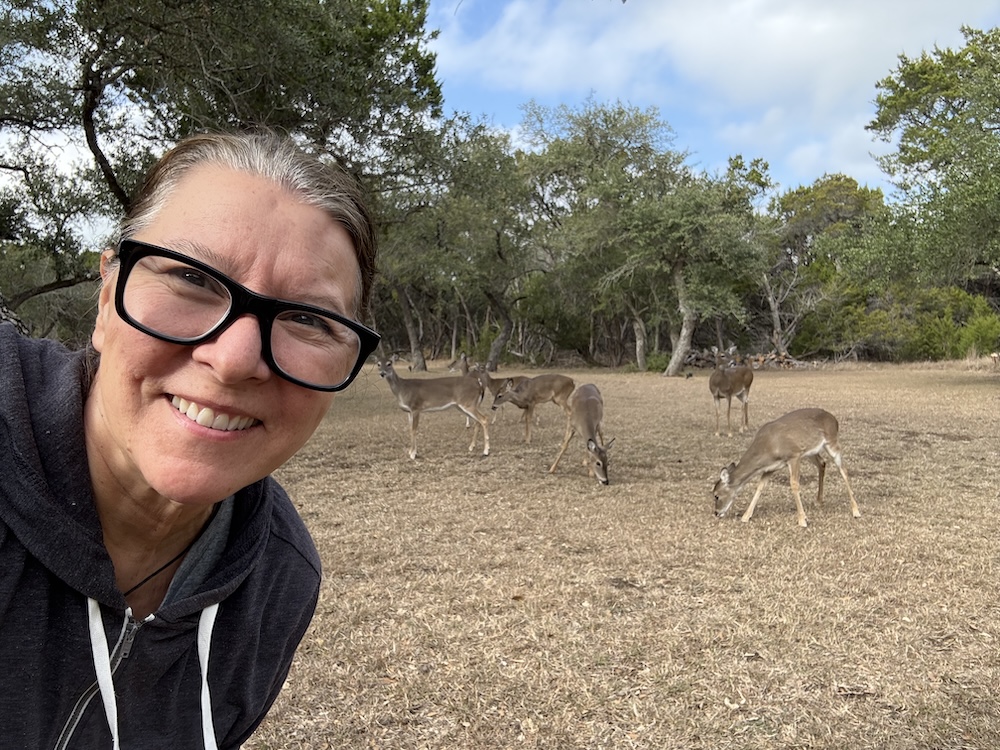
In that year, I’ve accidentally become a practical deer behavior specialist.
I know which corners they own.
I know the times they move.
I know which ones are curious and which ones are shy.
I can spot the interlopers.
It’s funny. There’s also a lesson here I don’t want to miss:
→ Patterns reward attention.
→ Patterns punish assumptions.
↳ Assumptions create activity. Patterns create progress.
My 2026 focus
I’m building the next year around three commitments:
- Deep pattern study. School. Reading. Fieldwork. Better mental models.
- Enablement over dependency. Your team owns the narrative. I install the thinking engine.
- Codification. Coaching, workshops, and playbooks that travel inside your company.
A messaging playbook is not a set of words. It’s a shared narrative that makes execution and alignment durable.
If you’re leading a team into 2026 and you want clearer alignment, faster decisions, and fewer “we thought we agreed” moments, that’s the lane.
One tool for your year-end reflection
Use the 6 Frames to pressure-test your 2026 plan. Answer each in a clean paragraph.
→ Who/What: What are we building? Who is it for?
→ Where: Where does this win and where does it fail?
→ How Much: What is the cost in people, time, attention?
→ When: What must be true by Q1, Q2, Q3?
→ How: What is the operating cadence? Who owns what?
→ Why: Why is this the right bet now?
If you cannot answer one frame crisply, you don’t have a plan. You have a vibe.
If you want to work together
In 2026, I’m taking on a smaller set of engagements with a tighter shape:
- Narrative coaching for founders and senior leaders
- Strategic narrative workshops for teams
- Messaging playbooks that make alignment durable
If this resonates, hit reply and we’ll chat to see if we’re a fit.
See you in 2026.


